How to Create an Interior Design Portfolio Website That Converts
Want to create an interior design portfolio website that not only shows off your best work, but also brings in new clients and projects? I’m sharing my top website design tips to consider when building out your interior design case study portfolio.
Table of Contents
Interior Design Portfolio Examples
Before diving into the ins-and-outs of creating a compelling interior design website, let’s start by sharing a few key portfolio projects designed by Made by NF and how these reflect not only the interior designer’s unique style, but also how they can vary based on end goals.
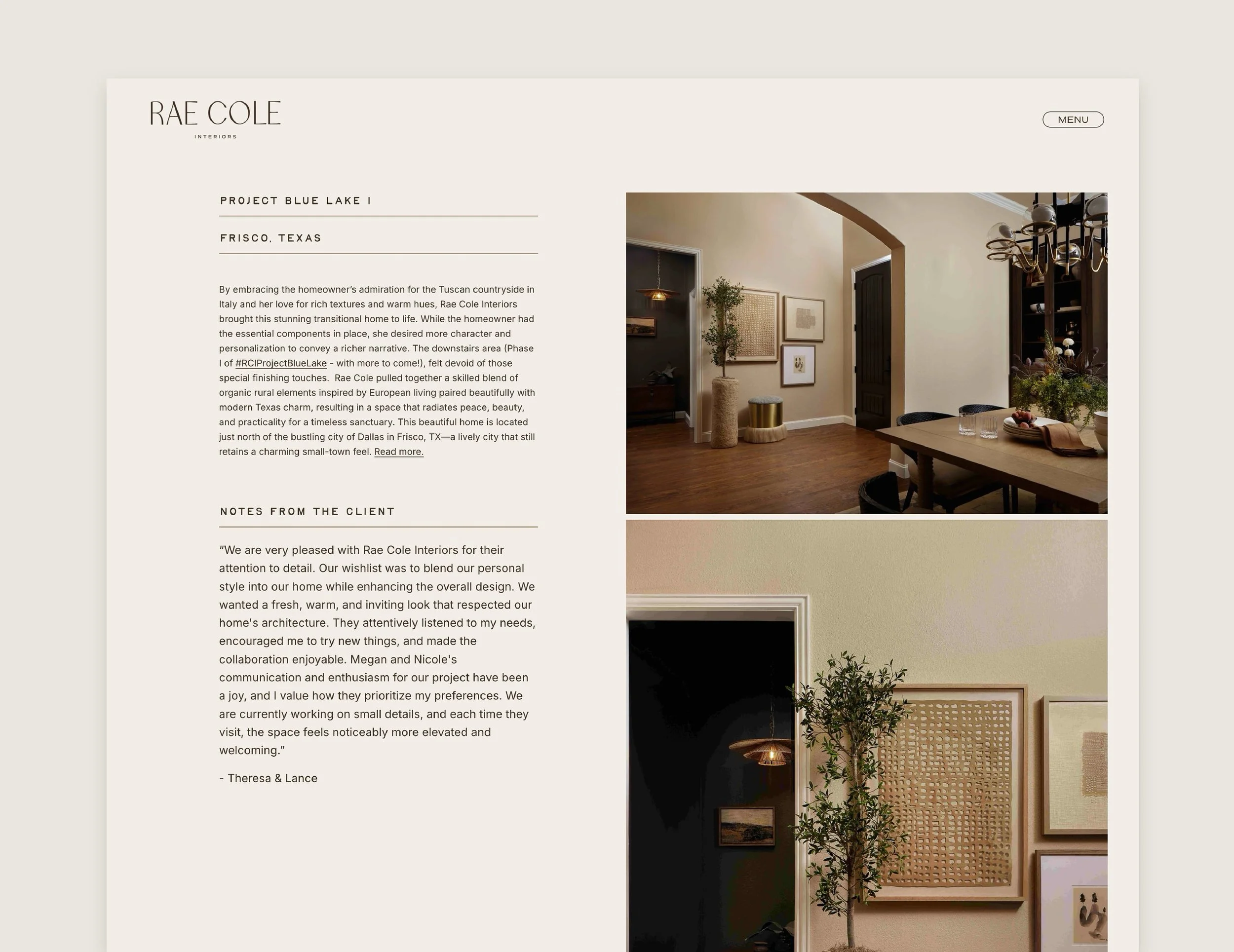
This full-service interior design studio showcases a minimal yet editorial feel to their portfolio design. Rather than going the traditional route of content on the top followed by imagery, we decided to split the screen so the user could read alongside seeing the imagery. The icing on the cake for this interior design portfolio website is that many of the final projects also include a high-end video showing the space. See the portfolio example here.
Another noteworthy item from this interior design website is the main portfolio landing page. Often these pages can be minimally designed, but we went in depth also showcasing the projects that are in the works fro this Dallas-based interior design studio. This helps with a smaller portfolio especially since many projects can take 18months-2 years from start to finish.
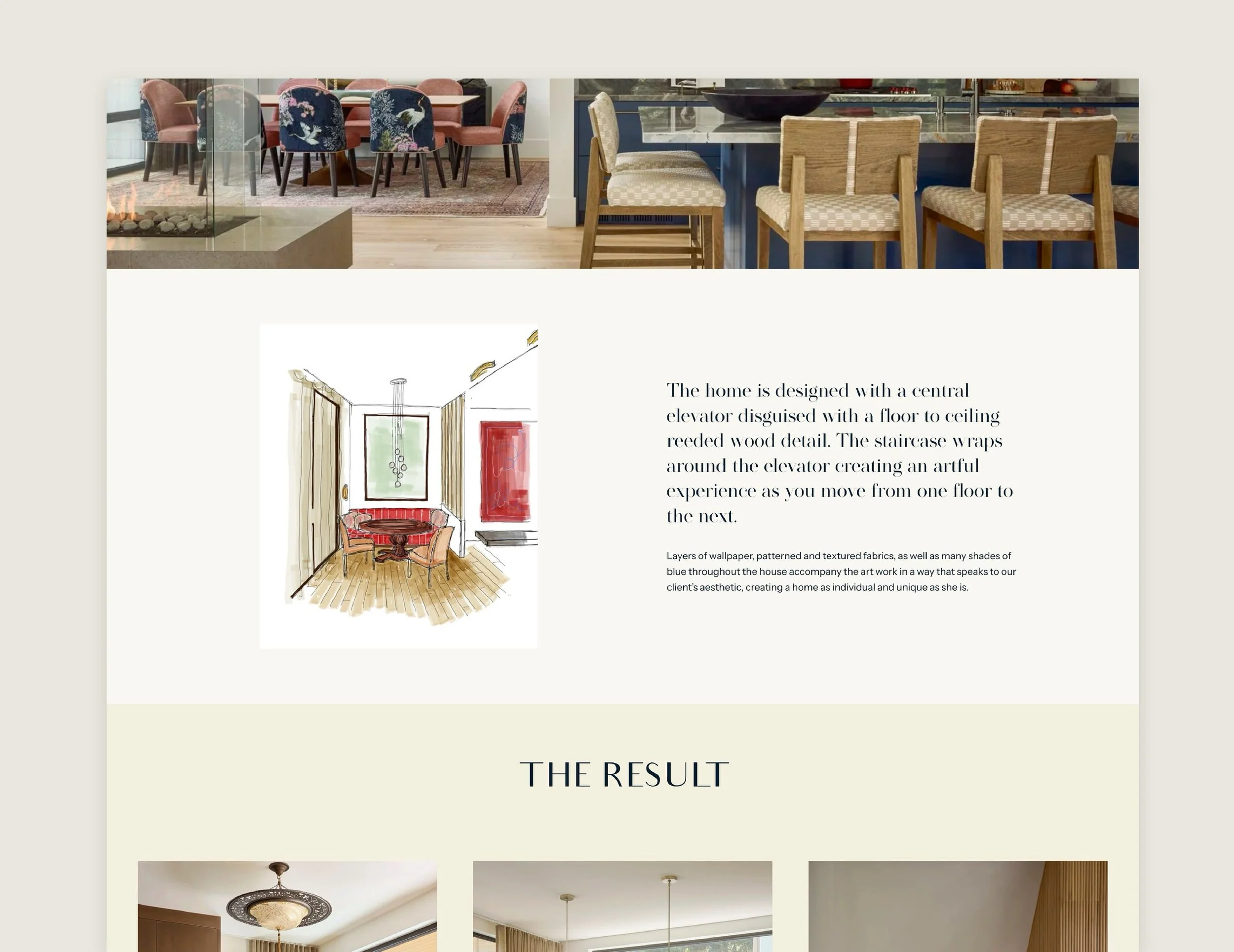
For this Canada based interior design firm, we wanted their website portfolio projects to feel warm, inviting and bring the reader through the entire process. From mixing in before images, sketches of spaces from the interior design team, there’s no detail that went unnoticed here. Layering challenges, transformations and highlights also help tell the full story of the space from start to finish, highlighting the benefit of working with an established interior designer. See the case study inspired interior design portfolio website designed by Made by NF here.
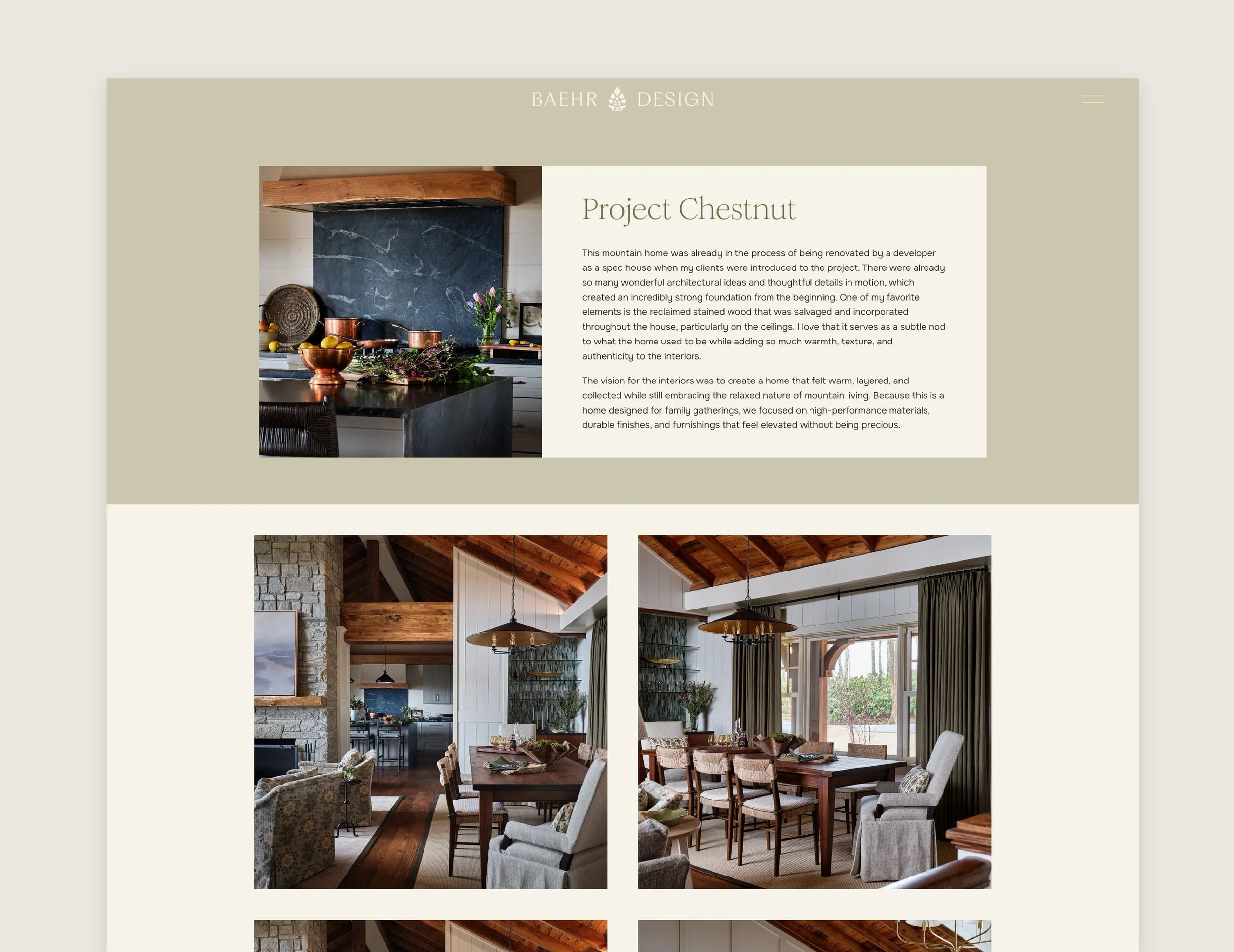
Classic meets charming with this full service interior design studio. The goal with this portfolio was for it to feel refined, thoughtful and editorial. The focus is on curated imagery, but with a project blurb at the top to help showcase the specifics of the project. See this editorial interior design portfolio project here.
One thing to note is the main portfolio page for this project has a filter system, allowing for prospective clients to peruse based on their specific design needs.

The interior design portfolio website for this Chicago based interior designer feels distinguished and on-brand. The overlapping tassel logo at the top of the navigation adds a layered and regal look, while the greek key border brings in a nod to her interior design style, effortlessly breaking up the project blurb and large format imagery. Explore this interior design portfolio website here.
Decide how to categorize your interior design projects
The first step to building out a strong portfolio is determining how the user will experience it. For example, if you are a luxury residential interior designer it may make sense to break projects out individually – such as The Hallman House, Project Winslow, etc. This allows for a clear, concise path that allows potential storytelling around each and every project.
Or maybe you are an interior designer that offers both residential and commercial – it may make sense to break them into unique categories, as most often these audiences are looking for unique features.
And for the budding interior designer, you may not have enough projects to break out individually yet, and that’s okay. This is often a good case for a standalone portfolio that’s a hybrid of multiple projects. This is also a top choice for more minimal brands, but keep in mind this offers less storytelling and often less opportunity for search engine optimization.
Determine the project quantity to show in your interior design portfolio website
This is where I always recommend quality over quantity. Any project being added to your interior design portfolio should reflect your target audience, favorite work and what you want to attract more of as an interior designer. Keep this lens throughout the entire portfolio to ensure it feels curated, distinct and refined.
I’ve helped many established interior designers over the years with their website redesigns, as this is often a point in the project where we pull back, sunset older projects and showcase the top 6-10 projects that really portray the values, vision and vibe of their interior design studio. Not to mention, these full-service projects take time – sometimes years – so don’t get discouraged if you only have a few top projects to add to your site.
Invest in professional photography
Finding an interior design photographer to professionally capture your work is a must. Not only to use the imagery for your interior design portfolio website, but also social media, collateral and so forth.
This investment is crucial to visually tell the story of the project, capture the feeling of the home, and to showcase the end result you’ve provided your client. In most markets there are local photographers who specialize in interiors, but two of my favorites (who also travel) are: Heather Talbert Photography and Marta Xochilit Perez.
Working with a photographer who specializes in interiors will be worth the investment, as they know how to really capture the details, the heart and the feeling of the project.
When using the photos for your website, consider thoughtful layouts that feel on-brand. If you lean more modern and contemporary, bring in more white space to your portfolio. Or maybe you’re more editorial and refined, consider ways to infuse that feeling with interesting layouts.
Some interior designers also invest in video.. This could be helpful in some use cases to add another layer of storytelling to your project.
And bonus tip: be sure to compress all your images for the web so they load quickly. Interior design websites are full of images, so making sure this is done is crucial. And don’t forget to rename the files for search before uploading.
Infuse Strategic storytelling with interior design portfolio website structure
Backing up your imagery with strategic storytelling will help the user experience and showcase your expertise. A few recommended sections to include on your interior design case study would be:
Project location
EX: Scottsdale, Arizona
Project services/scope – especially if you offer different services
EX: Full Service Residential Interior Design
Design descriptors – 3-5 words that evoke the sense of the project
EX: Organic, Thoughtful, Lived In
Project Overview
EX: This is where you can showcase a general overview of the project. Think high level 2-5 sentences.
Transformational highlights – these are nicely done in 2-3 bullet points or call outs
EX: This is where you show off your interior design expertise. Select a handful of transformational highlights or even challenges that happened during your project. Getting on a granular level will help the viewer see your expertise and further decide to work with you on building their dream home
Media highlight – if this project has been picked up by any major publications, share about it!
EX: As Seen in Domino Magazine. Share a photo, publication logo or even a short blurb. Don’t forget to link to the online feature if digital or add a PDF to open up to browse a print publication.
Testimonial from the client
EX: This is where you can help the user understand the experience from your past clients. These can range in length, but aim for a 1-2 paragraphs here. Let your client gush about you for a bit! Or take it up a level and do a video recorded testimonial.
Final call to action – invite others to reach out if they like your work
EX: Ready to build your dream home? Reach out to XYZ company to start the conversation.
Not only do these elements help enhance the overall feeling of the interior design portfolio website project – but they can also be helpful for search engine optimization, reaching new potential clients.
Take care of the small details
Pushing publish sounds super enticing when you are at the end of adding a new project to your interior design website. But before you do, take extra care to wrap things up fully. Be sure to be mindful of things such as your portfolio project’s search engine title, description and even the url structure. Each of these can become building blocks to showing up in potential search results, especially if you have articulated the niche and/or location of this specific project.
Coming Soon Projects
If your portfolio is light – or maybe you have some rather exciting coming soon projects in the works, adding a teaser section on the main portfolio landing page can help create excitement around the portfolio.
Using a flat lay of mood/inspo samples or even a sketch or rendering can help visually give a glimpse into what’s in the pipeline for your studio.
Frequently Asked Questions about what makes a good interior design portfolio website
-
I’d say the most common website platforms for interior designers are Squarespace and Showit. Both allow for the flexibility to add beautiful, custom layouts in a visual manner. Made by NF specializes in custom Squarespace websites for interior designers.
-
If you only have a few projects but they have great photography, I would suggest breaking them out by project. You can always create an “ In the Works” section to tease out upcoming projects.
If you have a few projects but very limited photography, it may be best to make one portfolio that encompasses them all for the time being. This can always be a goal to break out by project or category type in the future. -
A good interior design portfolio website isn’t just about the beautiful imagery – it helps articulate and showcase your interior design style, expertise and transition of the project. This is often where the storytelling or case study approach can really enhance the overall feel of the project and ensure that your expertise and design style is properly displayed. Check out these examples on my portfolio of top interior design brand and websites.
-
As mentioned above, quality over quantity is what we are after here – especially for the interior design portfolio projects. Investing in an interior design photographer is highly recommended to ensure you have the right type of imagery to showcase your work.
Ready for an interior design portfolio website that feels like you?
Made by NF offers elevated branding and Squarespace website design for interior designers.